Keynote Speakers
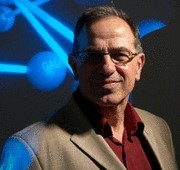
Professor Nikola Kasabov
Fellow IEEE, Fellow RSNZ, DV Fellow RAE UK
Director, Knowledge Engineering and Discovery Research Institute, Auckland University of Technology, Auckland, New Zealand
Homepage: https://kedri.aut.ac.nz/staff/staff-profiles/professor-nikola-kasabov
Advisory/Visiting Professor Shanghai Jiao Tong University, Robert Gordon University UK
Deep Learning, Deep Knowledge Representation and Knowledge Transfer
with Brain-Inspired Neural Network Architectures
Abstract
The talk argues and demonstrates that the third generation of artificial neural networks, the spiking neural networks (SNN), can be used to design brain-inspired architectures that are not only capable of deep learning of temporal or spatio-temporal data, but also enabling the extraction of deep knowledge representation from the learned data. Similarly to how the brain learns time-space data, these SNN models do not need to be restricted in number of layers, neurons in each layer, etc. as it is the case with the traditional deep neural network architectures. When the SNN model is designed to follow a brain template, knowledge transfer between humans and machines in both directions becomes possible through the creation of brain-inspired BCI. The presented approach is illustrated on an exemplar SNN architecture NeuCube (free software and open source available from www.kedri.aut.ac.nz/neucube) and case studies of brain and environmental data modelling and knowledge representation using incremental and transfer learning algorithms These include predictive modelling of EEG and fMRI data measuring cognitive processes and response to treatment, AD prediction, BCI, human-human and human-VR communication, hyper-scanning and other. More details can be found in the recent book: Time-Space, Spiking Neural Networks and Brain-Inspired Artificial Intelligence, Springer,2019, https://www.springer.com/gp/book/9783662577134.
Biodata
Professor Nikola Kasabov is Fellow of IEEE, Fellow of the Royal Society of New Zealand, Fellow of the INNS College of Fellows, DVF of the Royal Academy of Engineering UK and the Scottish Computer Association. He is the Founding Director of the Knowledge Engineering and Discovery Research Institute (KEDRI), Auckland and Professor at the School of Engineering, Computing and Mathematical Sciences at Auckland University of Technology. Kasabov is the 2019 President of the Asia Pacific Neural Network Society (APNNS) and Past President of the International Neural Network Society (INNS). He is member of several technical committees of IEEE Computational Intelligence Society and Distinguished Lecturer of IEEE (2012-2014). He is Editor of Springer Handbook of Bio-Neuroinformatics, Springer Series of Bio-and Neurosystems and Springer journal Evolving Systems. He is Associate Editor of several journals, including Neural Networks, IEEE TrNN, Tr CDS, Information Sciences, Applied Soft Computing. Kasabov holds MSc and PhD from TU Sofia, Bulgaria. His main research interests are in the areas of neural networks, intelligent information systems, soft computing, bioinformatics, neuroinformatics. He has published more than 620 publications. He has extensive academic experience at various academic and research organisations in Europe and Asia, including: TU Sofia Bulgaria; University of Essex UK; University of Otago, NZ; Advisory Professor at Shanghai Jiao Tong University, Visiting Professor at ETH/University of Zurich and Robert Gordon University UK. Prof. Kasabov has received a number of awards, among them: Doctor Honoris Causa from Obuda University, Budapest; INNS Ada Lovelace Meritorious Service Award; NN Best Paper Award for 2016; APNNA ‘Outstanding Achievements Award’; INNS Gabor Award for ‘Outstanding contributions to engineering applications of neural networks’; EU Marie Curie Fellowship; Bayer Science Innovation Award; APNNA Excellent Service Award; RSNZ Science and Technology Medal; 2015 AUT Medal; Honorable Member of the Bulgarian and the Greek Societies for Computer Science. More information of Prof. Kasabov can be found on the KEDRI web site: http://www.kedri.aut.ac.nz.

Professor Geoff Webb
Monash University Centre for Data Science, Australia
Homepage: http://i.giwebb.com
Time series classification at scale
Abstract
Time series classification is a fundamental data science problem, providing understanding of dynamic processes as they evolve over time. The recent introduction of ensemble techniques has revolutionised this field, greatly increasing accuracy, but at a cost of increasing already burdensome computational overheads. I present new time series classification technologies that achieve the same accuracy as recent state-of-the-art developments, but with many orders of magnitude greater efficiency and scalability. These make time series classification feasible at hitherto unattainable scale.
Biodata
Prof. Geoff Webb is Director of the Monash University Centre for Data Science. He is a leading data scientist and the only Australian to have been Program Committee Chair of the two leading Data Mining conferences,ACM SIGKDDandIEEE ICDM. He was elevated toIEEE Fellowin 2015 and his numerous awards include the inauguralEureka Prize for Excellence in Data Science(2017).
He was editor in chief of Data Mining and Knowledge Discovery from 2005 to 2014. He is a Technical Advisor to BigML Inc, who have incorporated his best of class association discovery software, Magnum Opus, as a core component of their cloud-based Machine Learning service. He developed many of the key mechanisms of support-confidence association discovery in the 1980s. His OPUS search algorithm remains the state-of-the-art in rule search. He pioneered multiple research areas as diverse as black-box user modelling, interactive data analytics and statistically-sound pattern discovery. He has developed many useful machine learning algorithms that are widely deployed.
Professor Webb has published more than 200 scientific papers. He is the author of the Magnum Opus commercial data mining software package, a system that embodies many of his research contributions in the area of data mining and has contributed many components to the popular Weka machine learning workbench.
He has been a chief investigator on competitive grants totalling more than $24 million.
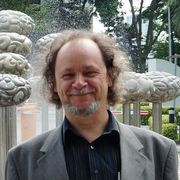
Professor Włodzisław Duch
Nicolaus Copernicus University, Poland
Homepage: http://www.is.umk.pl/~duch/
Artificial Intelligence and Neurocognitive Technologies for Human Augmentation
Abstract
Artificial Intelligence has great impact on every aspect of technology, including neurotechnologies used for human augmentation. Progress in recent years in methods of measurement and analysis of neuroimaging and electrophysiological data opens new areas for transdisciplinary applications. Extracting "fingerprints" of active brain regions or subnetworks from EEG and ECoG data allows for more reliable brain-computer interfaces (BCI), neurorehabilitation, diagnostic methods in neuropsychiatry, therapeutic interventions using neuromodulation, optimization of brain processes through neurofeedback, direct brain stimulation and behavioral procedures, and linking brain activity with thoughts, intentions, emotions and other mental states. Already some commercial applications for treating epilepsy, major depression and other mental problems are on the market.
Neurocognitive technologies will change in an unprecedented way the very nature of people, human-computer interaction and their coupling with physical environment, including social interactions between people.
Biodata
Wlodzislaw Duch is the head of the Neurocognitive Laboratory in the Center of Modern Interdisciplinary Technologies, and for many years has been running the Department of Informatics, both at Nicolaus Copernicus University, Torun, Poland. Currently his laboratory is hosting Polish node of the International Neuroinformatics Coordination Facility (INCF). In 2014-15 he has served as a deputy minister for science and higher education in Poland, and in 2011-14 as the Vice-President for Research and ICT Infrastructure at his University. Before that he has worked as the Nanyang Visiting Professor (2010-12) in the School of Computer Engineering, Nanyang Technological University, Singapore where he also worked as a visiting professor in 2003-07. MSc (1977) in theoretical physics, Ph.D. in quantum chemistry (1980), postdoc at Univ. of Southern California, Los Angeles (1980-82), D.Sc. in applied math (1987); worked at the University of Florida; Max-Planck-Institute, Munich, Germany, Kyushu Institute of Technology, Meiji and Rikkyo University in Japan, and several other institutions. He is/was on the editorial board of IEEE TNN, CPC, NIP-LR, Journal of Mind and Behavior, and 14 other journals; was co-founder & scientific editor of the “Polish Cognitive Science” journal; for two terms has served as the President of the European Neural Networks Society executive committee (2006-2008-2011), is an active member of IEEE CIS Technical committee; International Neural Network Society Board of Governors elected him to their most prestigious College of Fellows, and elected member of the Complex Systems Committee of the Polish Academy of Arts and Letters. Expert of the European Union science programs (FP4 to Horizon 2020), member of the high-level expert group of European Institute of Innovation & Technology (EIT). Has published over 350 peer-reviewed scientific papers and over 270 abstracts and popular articles on diverse subjects, has written or co-authored 5 books and co-edited 21 books. His DuchSoft company has made GhostMiner datamining software package for many years marketed by Fujitsu.
Wlodek Duch is well known for development of computational intelligence (CI) methods that facilitate understanding of data, general CI theory based on similarity evaluation and composition of transformations, meta-learning schemes that automatically discover the best model for a given data. He is working on development of neurocognitive informatics, focusing on algorithms inspired by cognitive functions, information flow in the brain, learning and neuroplasticity, understanding of attention, integrating genetic, molecular, neural and behavioral levels to understand attention deficit disorders in autism and other diseases, infant learning and toys that facilitate mental development, creativity, intuition, insight and mental imagery, geometrical theories that allow for visualization of mental events in relation to the underlying neurodynamics. He has also written several papers in the philosophy of mind, and was one of the founders of cognitive sciences in Poland.
Since 2014 he is heading a unique highly transdisciplinary NeuroCognitive Laboratory, with experts in hardware and software, signal processing, physics, cognitive science, psychology, linguistics, philosophy and medicine. His Lab works with infants, preschool children, students and older people, using neuroimaging techniques, behavioral experiments and computational modelling.
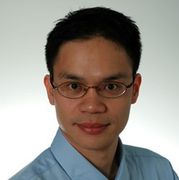
Professor Dusit Niyato
School of Computer Science and Engineering (SCSE) and
School of Physical and Mathematical Sciences (SPMS)
Nanyang Technological University, Singapore
Homepage: https://www3.ntu.edu.sg/home/dniyato/
Reliable Federated Learning for Mobile Networks
Abstract
Federated learning, as a promising machine learning approach, has emerged to leverage a distributed personalized dataset from a number of nodes, e.g., mobile devices, to improve performance while simultaneously providing privacy preservation for mobile users. In the federated learning, training data is widely distributed and maintained on the mobile devices as workers. A central aggregator updates a global model by collecting local updates from mobile devices using their local training data to train the global model in each iteration. However, unreliable data may be uploaded by the mobile devices (i.e., workers), leading to frauds in tasks of federated learning. The workers may perform unreliable updates intentionally, e.g., the data poisoning attack, or unintentionally, e.g., low-quality data caused by energy constraints or high-speed mobility. Therefore, finding out trusted and reliable workers in federated learning tasks becomes critical. In this talk, the concept of reputation is introduced as a metric. Based on this metric, a reliable worker selection scheme is proposed for federated learning tasks. Consortium blockchain is leveraged as a decentralized approach for achieving efficient reputation management of the workers without repudiation and tampering. The proposed approach is demonstrated to improve the reliability of federated learning tasks in mobile networks.
Biodata
Dusit Niyato is currently a professor in the School of Computer Science and Engineering and, by courtesy, School of Physical & Mathematical Sciences, at the Nanyang Technological University, Singapore. He received B.E. from King Mongkuk’s Institute of Technology Ladkrabang (KMITL), Thailand in 1999 and Ph.D. in Electrical and Computer Engineering from the University of Manitoba, Canada in 2008. He has published more than 380 technical papers in the area of wireless and mobile networking, and is an inventor of four US and German patents. He has authored four books including "Game Theory in Wireless and Communication Networks: Theory, Models, and Applications" with Cambridge University Press. He won the Best Young Researcher Award of IEEE Communications Society (ComSoc) Asia Pacific (AP) and The 2011 IEEE Communications Society Fred W. Ellersick Prize Paper Award. Currently, he is serving as a senior editor of IEEE Wireless Communications Letter, an area editor of IEEE Transactions on Wireless Communications (Radio Management and Multiple Access), an area editor of IEEE Communications Surveys and Tutorials (Network and Service Management and Green Communication), an editor of IEEE Transactions on Communications, an associate editor of IEEE Transactions on Mobile Computing, IEEE Transactions on Vehicular Technology, and IEEE Transactions on Cognitive Communications and Networking. He was a guest editor of IEEE Journal on Selected Areas on Communications. He was a Distinguished Lecturer of the IEEE Communications Society for 2016-2017. He was named the 2017-2019 highly cited researcher in computer science. He is a Fellow of IEEE.